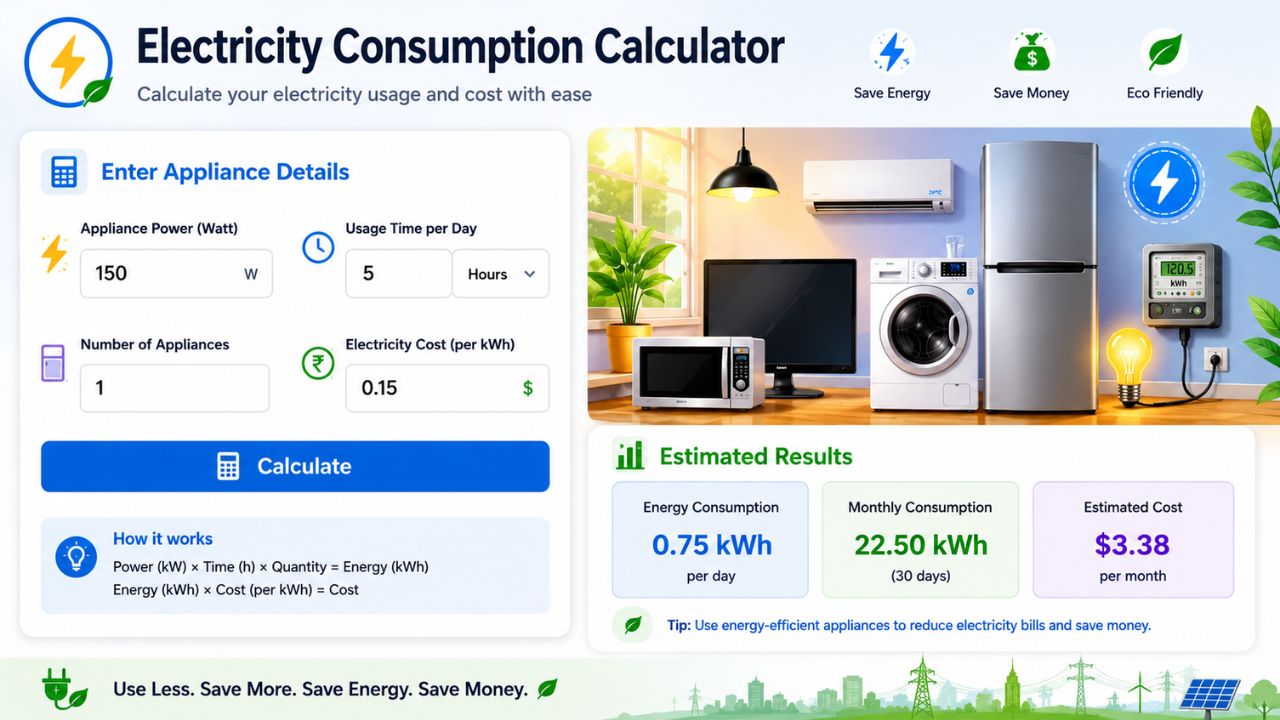
Electricity Consumption Calculator
Calculate appliance electricity use in kWh and estimate daily, monthly, and annual energy costs.
Watts • kW • kWh • Monthly Cost • Annual CostAppliance 1
Appliance 2
Appliance 3
Appliance 4
Appliance 5
Appliance 6
| Appliance | Power | Quantity | Hours/Day | Daily kWh | Monthly kWh | Monthly Cost |
|---|---|---|---|---|---|---|
| Appliance 1 | 0 W | 0 | 0 | 0.00 | 0.00 | $0.00 |
| Appliance 2 | 0 W | 0 | 0 | 0.00 | 0.00 | $0.00 |
| Appliance 3 | 0 W | 0 | 0 | 0.00 | 0.00 | $0.00 |
| Appliance 4 | 0 W | 0 | 0 | 0.00 | 0.00 | $0.00 |
| Appliance 5 | 0 W | 0 | 0 | 0.00 | 0.00 | $0.00 |
| Appliance 6 | 0 W | 0 | 0 | 0.00 | 0.00 | $0.00 |
How the Electricity Consumption Calculator Works
Enter the power rating of each appliance, quantity, and average number of hours used each day. The calculator converts appliance power into kilowatt-hours and adds the consumption from all appliances.
Enter your electricity price per kWh to estimate daily, monthly, and annual energy costs.
Electricity Consumption Formula
Electricity consumption in kWh is calculated using: Watts ÷ 1,000 × Hours Used × Quantity.
For example, a 1,500-watt appliance running for 4 hours uses: 1,500 ÷ 1,000 × 4 = 6 kWh.
Watts, Kilowatts, and kWh
Watts and kilowatts measure power. One kilowatt equals 1,000 watts. A kilowatt-hour measures energy used over time.
A 1 kW appliance operating for one hour uses 1 kWh of electricity.
Monthly Electricity Consumption
Daily electricity consumption is multiplied by the number of days used during the month. The default setting is 30 days, but you can change it.
Electricity Cost per kWh
Enter your average electricity rate per kWh. Actual electricity bills may also include tiered rates, time-of-use pricing, taxes, fuel adjustments, demand charges, and fixed fees.
Frequently Asked Questions
How do I calculate electricity consumption?
Divide appliance watts by 1,000, then multiply by hours of use and the number of appliances.
How do I convert watts to kilowatts?
Divide watts by 1,000. For example, 1,500 watts equals 1.5 kW.
What is a kilowatt-hour?
A kilowatt-hour is a unit of electrical energy. Using 1 kW for one hour equals 1 kWh.
How do I calculate monthly kWh?
Multiply daily kWh by the number of days the appliance operates during the month.
Can I calculate several appliances together?
Yes. This calculator supports up to six appliance entries.
Can appliance power be entered in kW?
Yes. Select kW instead of Watts in the appliance unit menu.
What if I have several identical appliances?
Enter the number of identical appliances in the Quantity field.
Why can my real electricity bill be different?
Actual bills can include tiered tariffs, taxes, fixed fees, demand charges, time-of-use rates, and changing appliance usage.
Does a refrigerator use full power for 24 hours?
Usually not. Refrigerators and similar appliances cycle on and off. Actual energy consumption depends on the operating cycle.
Is this an official electricity bill calculator?
No. It estimates electricity consumption and cost. Your utility’s meter readings and tariff determine the official bill.