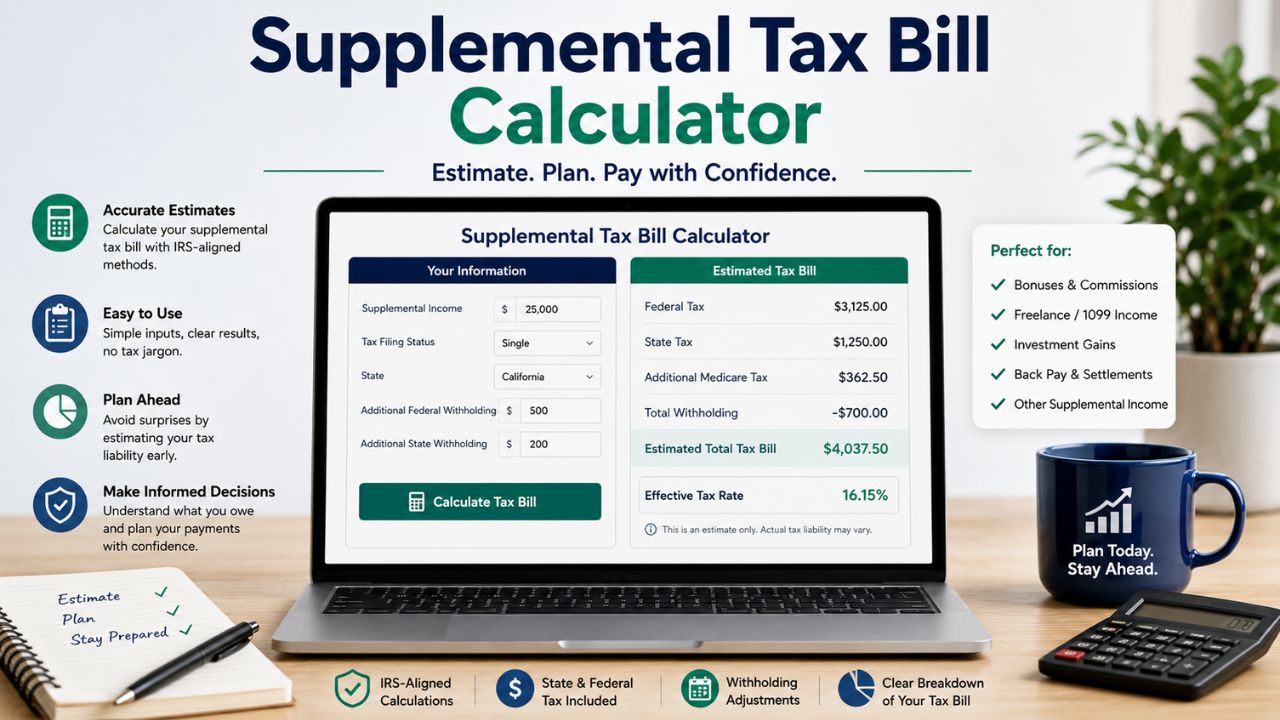
Supplemental Tax Bill Calculator
Estimate a California supplemental property tax bill after a change in ownership or completion of new construction.
California • Change in Ownership • New Construction • ProrationSupplemental Bill #1
Supplemental Bill #2
How the Supplemental Tax Bill Calculator Works
California supplemental property taxes can apply when real property is reassessed after a qualifying change in ownership or completion of new construction.
The supplemental assessment is generally based on the difference between the new assessed value and the prior assessed value.
California Supplemental Tax Formula
The basic calculation is: Net Supplemental Assessment × Local Property Tax Rate × Proration Factor.
The reassessment becomes effective on the first day of the month following the change in ownership or completion of new construction. California’s fiscal year runs from July 1 through June 30.
Why Can There Be Two Supplemental Tax Bills?
A supplemental event from January through May can affect both the remainder of the current fiscal year and the following fiscal year. This can create two supplemental assessments.
Events from June through December generally result in one supplemental assessment.
California Supplemental Tax Proration Factors
| Event Month | Tax Effective | First Bill Factor | Typical Bills |
|---|---|---|---|
| January | February 1 | 0.42 | 2 |
| February | March 1 | 0.33 | 2 |
| March | April 1 | 0.25 | 2 |
| April | May 1 | 0.17 | 2 |
| May | June 1 | 0.08 | 2 |
| June | July 1 | 1.00 | 1 |
| July | August 1 | 0.92 | 1 |
| August | September 1 | 0.83 | 1 |
| September | October 1 | 0.75 | 1 |
| October | November 1 | 0.67 | 1 |
| November | December 1 | 0.58 | 1 |
| December | January 1 | 0.50 | 1 |
What If the New Assessed Value Is Lower?
A supplemental assessment can be negative when the new assessed value is lower than the prior assessed value. In that situation, the calculation may result in a supplemental refund or credit instead of an additional tax bill.
Local Property Tax Rate
Property tax rates vary by tax-rate area because voter-approved debt and other components may apply. Use the rate applicable to the property rather than assuming every California property has the same total tax rate.
Frequently Asked Questions
What is a supplemental tax bill?
It is an additional property tax bill resulting from a supplemental assessment after a qualifying ownership change or completed new construction.
Does a supplemental bill replace my regular property tax bill?
No. A supplemental property tax bill is separate from the regular annual secured property tax bill.
How is a supplemental assessment calculated?
It is generally the new assessed value minus the prior assessed value, subject to applicable exemptions and adjustments.
Why is the supplemental bill prorated?
The reassessment begins after the supplemental event, so tax for the affected fiscal year applies only to the applicable portion of that fiscal year.
Why can I receive two supplemental tax bills?
An event from January through May may create one prorated assessment for the current fiscal year and one full assessment for the following fiscal year.
What happens for a June purchase?
A June event becomes effective July 1 and can create a full-year supplemental assessment for the ensuing fiscal year.
Can a supplemental assessment result in a refund?
Yes. If the reassessed value is lower than the prior assessed value, the supplemental assessment can be negative.
What property tax rate should I enter?
Enter the applicable rate for the property from your county tax information or tax-rate area.
Should I enter a homeowner’s exemption?
Enter an exemption only if it applies to your supplemental assessment and has been approved or confirmed for your situation.
Is this an official county tax calculator?
No. This is an independent estimator. The county assessor, auditor-controller, and tax collector determine the official assessment and supplemental bill.