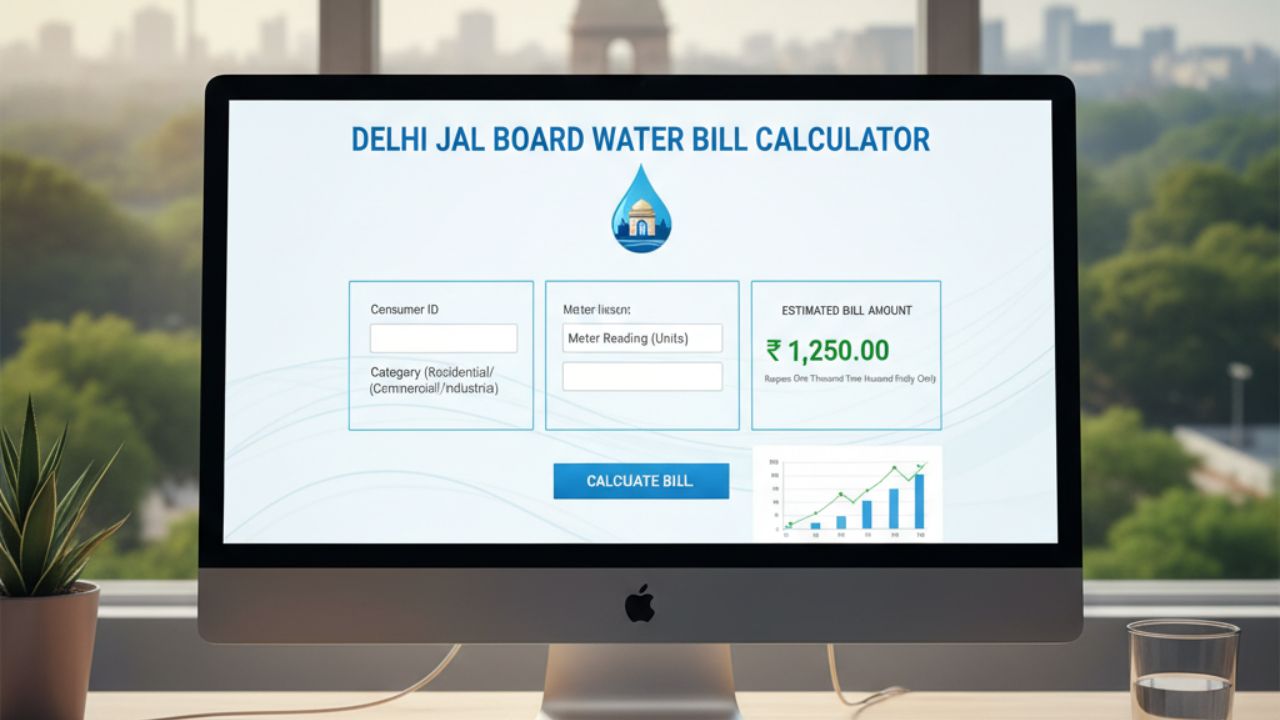
Delhi Jal Board Bill Calculator
Official estimate based on DJB 2026-27 tariff slabs. Free water up to 20,000 litres per month remains active.
Delhi Jal Board FAQs (2026-27)
Yes, the Delhi Budget 2026-27 continues the policy of providing free water up to 20,000 litres (20 KL) per month to residents with functional water meters. If your usage exceeds 20 KL, you are charged for the total consumption.
For usage between 20-30 KL, the volumetric rate is ₹26.36/KL. For usage above 30 KL, the rate increases to ₹43.93/KL. A fixed service charge is also applied based on the slab.
In Delhi, the sewerage charge is calculated as 60% of the total water volumetric charge. This fee covers the cost of maintaining the city’s sewage treatment plants (STPs) and underground drainage network.
Fixed Service Charges for 2026: 0-20 KL is ₹146.41, 20-30 KL is ₹219.62, and above 30 KL is ₹292.82 per month. These are waived only if your total bill qualifies for the 20 KL subsidy.
Yes, the Delhi government has extended the **Late Payment Surcharge (LPSC) Waiver Scheme** until August 15, 2026. Domestic consumers only need to pay the principal amount to clear their pending dues.
Water Cess is an environmental tax charged at ₹0.02 (2 paise) per KL of water consumed. It is a mandatory fee under the Water (Prevention and Control of Pollution) Cess Act.
You can pay via the official **DJB RMS Portal** or the **m-Seva App**. It is also integrated into apps like Paytm, PhonePe, and Google Pay under the ‘Water Bill’ section using your 10-digit KNO number.
The KNO (Know Your Number) is a unique 10-digit identification number printed on the top right corner of your Delhi Jal Board bill. You need this for all online transactions and complaints.
If your meter is not functional, DJB generates a “Provisional Bill” based on an average of 25 KL per month. To avoid overcharging, you should apply for meter replacement via the DJB portal immediately.
You can dial the 24/7 DJB helpline at 1916. For billing issues, you can visit your local Zonal Revenue Office (ZRO) or participate in the ‘Water Lok Adalats’ organized by the government.