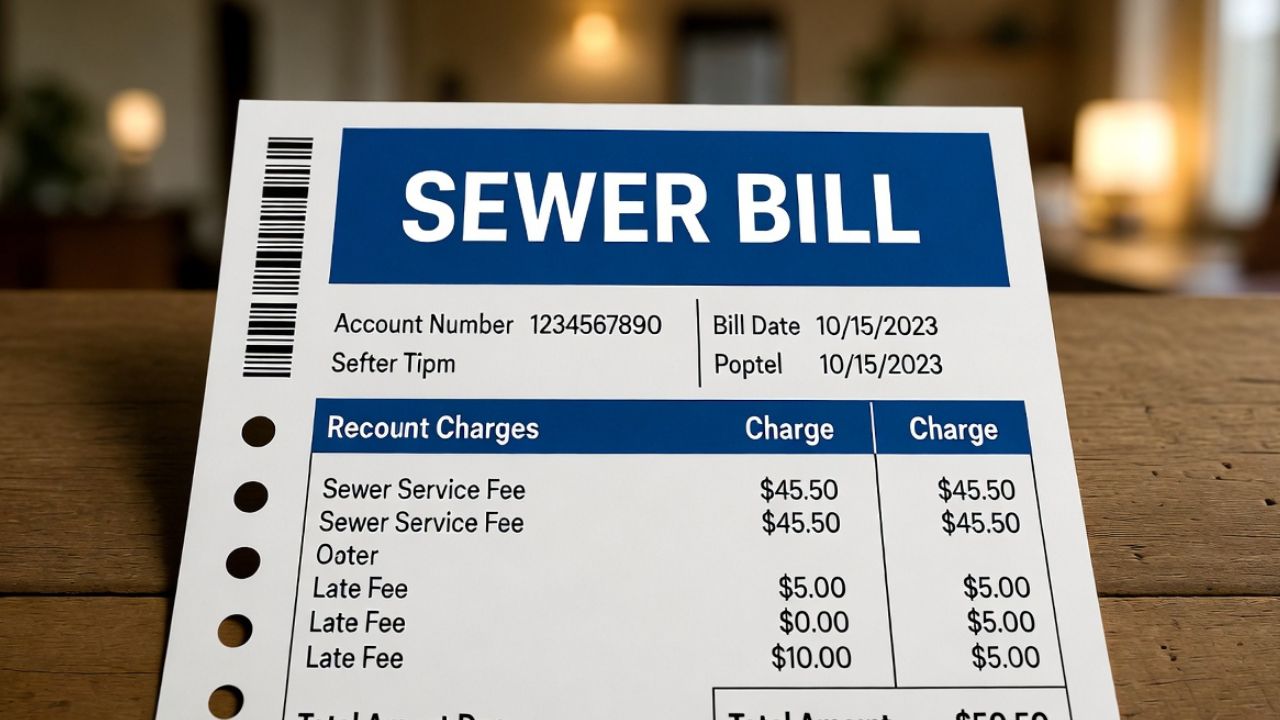
Ever opened your utility bill and scratched your head at the sewer charges? You’re not alone. Many homeowners wonder why their sewer bill seems high or how it’s figured out.
The good news? It’s usually tied to something familiar—your water use. In most towns and cities, local utilities assume most water you use indoors ends up in the sewer system. So they base the sewer charges on your metered water consumption.
But here’s the catch: the exact method varies by location.
Some places use a straight percentage of water use, others apply winter water averaging to avoid charging for summer lawn watering, and a few use flat rates or property-based fees. Understanding these basics helps you spot ways to lower costs, like fixing leaks or installing low-flow fixtures.
Now, let’s dive into the common ways sewer bills get calculated across the country.
Why Most Sewer Bills Depend on Water Usage
Utilities track water with meters, measuring in units like gallons, CCF (hundred cubic feet, where 1 CCF = 748 gallons), or MCF (thousand cubic feet). Since it’s tough to meter sewage directly for homes, they link sewer fees to water readings.
This approach makes sense. Showers, laundry, toilets, and dishes all send water down the drain. Outdoor uses like sprinklers often don’t, so many systems adjust for that.
Common units you’ll see:
- Gallons (direct)
- CCF (most popular for bills)
- MCF (sometimes used)
Pro tip: Check your bill or utility website for the unit. It clarifies everything.
Common Methods for Calculating Sewer Bills
Residential sewer bills fall into a few main categories. Here’s a breakdown.
1. Direct Monthly Water Use (Simplest Method)
Your sewer charge matches your current water use, often with a base fee plus a volume charge.
Example from some California districts:
- Base fee (covers infrastructure)
- Then $X per 1,000 gallons or per CCF
Step-by-step calculation:
- Find your water usage (e.g., 12 CCF this month).
- Apply any adjustment (some charge 95% of water use, assuming 5% evaporates outdoors).
- Add the base fee.
- Multiply usage by the rate.
If your water bill shows 10,000 gallons and the sewer rate is $5 per 1,000 gallons after a base, your variable sewer charge might hit $50.
2. Winter Water Averaging (Popular in Many Cities)
This prevents high summer bills from irrigation. Utilities average your water use during rainy months (usually November–April) and apply that for the year.
How it works:
- Collect winter usage data.
- Calculate average monthly use.
- Use that average (or the lower of actual vs. average in summer) for billing.
In one Utah city, they average November–April water use, then charge $10 per 1,000 gallons on that average all year.
Real example:
- Winter months: 10, 15, 20, 25, 10 thousand gallons.
- Total = 80, divide by 5 months = 16 thousand gallons average.
- Sewer bill: 16 × $10 = $160/month (plus any base fee).
This keeps bills steady and fairer for gardeners.
3. Flat Rate or Property-Based Charges
Some areas charge a fixed amount per home or based on lot size, number of bedrooms, or Equivalent Residential Units (ERU).
In one Washington district, single-family homes pay a base like $45/month per ERU, no usage tie-in.
This method simplifies billing but doesn’t reward conservation.
4. Tiered or Block Rates
Similar to water tiers, higher usage costs more per unit to encourage saving.
A city might charge:
- First 2,000 gallons: included in base
- Next tier: $5.51 per thousand
- Over certain amount: higher rate
Check your local utility site for the exact tiers.
Quick Comparison of Sewer Calculation Methods
| Method | Based On | Pros | Cons | Common In |
|---|---|---|---|---|
| Direct Water Use | Current monthly water | Easy to understand | Summer spikes from outdoor use | Many urban areas |
| Winter Averaging | Winter/low-use months | Fairer, stable bills | Takes time to adjust for changes | Seattle, LA, many Western cities |
| Flat Rate | Property type/size | Predictable, simple admin | No incentive to conserve | Some smaller districts |
| Tiered/Block | Usage brackets | Rewards low users | Complex if tiers confuse | Growing number of utilities |
Tips to Lower Your Sewer Bill
Small changes add up fast.
- Fix leaks right away. A dripping faucet wastes hundreds of gallons.
- Install low-flow toilets and showerheads. They cut indoor use without noticing.
- Switch to water-efficient appliances.
- Reduce outdoor watering. Use drought-resistant plants.
- Ask about adjustments. Some utilities offer credits for pools or leaks.
For accurate rates, visit your local utility website or the EPA’s Watersense page (https://www.epa.gov/watersense) for conservation tips.
FAQs About How to Calculate Sewer Bill
How do I find my exact sewer calculation method?
Check your monthly bill or utility website. Most include a breakdown or “how we calculate” section. Call customer service if unclear.
Does sewer bill include stormwater fees?
Sometimes yes. Many bills bundle stormwater runoff charges with sewer, especially in combined systems. Look for separate line items.
Can I get a sewer bill adjustment?
Yes, often. Report leaks, pool fills, or irrigation meters. Provide proof, and many utilities credit excess usage.
Conclusion
Calculating your sewer bill boils down to knowing your local rules, usually starting with water usage. Grab your latest bill, note the water amount, and apply the rates or averages your utility uses.
Understanding this empowers you to conserve water and potentially cut costs. Small habits make a big difference over time.
Disclaimer: Sewer rates and calculation methods vary widely by city, county, or utility district. This article offers general guidance based on common US practices. Always refer to your specific utility provider for exact rates, formulas, and policies. Rates can change annually.